Swing Clinic
The check-up your swing never had.
"What is wrong with my swing, and what do I do about it?" Five swings with the sensors you own, and the app answers like a coach would: what is wrong, how often, why, what to do first, and how long it will take.
How a clinic runs
Set up
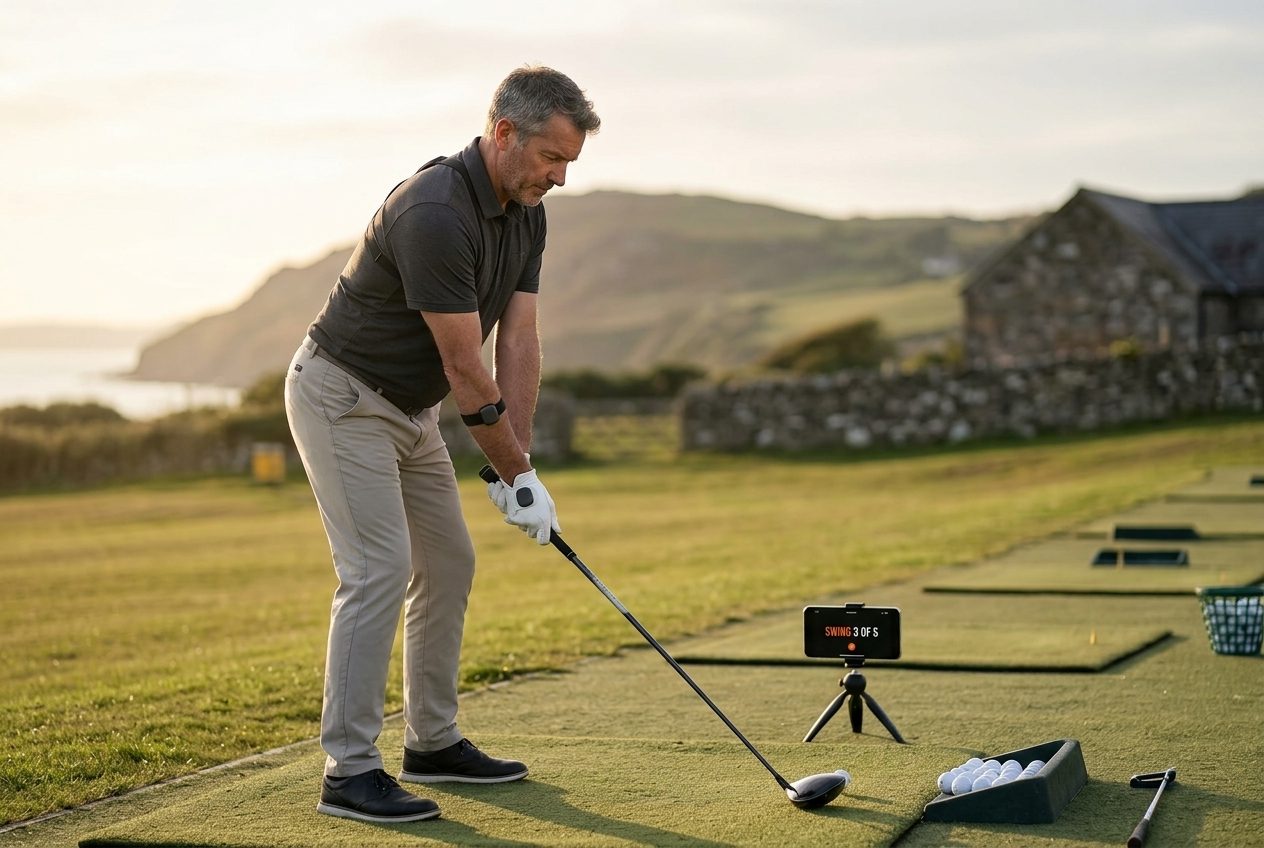
Choose 1–10 swings (five is enough to tell a habit from a one-off), the club, and whether to film. Video on means the phone stands on the ground facing you; off means it stays in your pocket. The sheet is the same either way.
Swing
Address, pause for half a second, swing. "Swing 3 of 5" on screen, a buzz when it is captured. A swing the sensors cannot read is not counted, and the app says why. Nothing to tap.
Read the sheet
Built the moment the last swing lands: an overall score, six phase ratings, the three things to work on and why, the three things you do well, and how consistent you were. The top recommendation is spoken.
Every phase, rated — or honestly not
Six parts of the swing, each scored 0–100 from the faults seen in that phase. A phase your kit cannot measure shows a dash and the reason — "needs Kit 2", "the Takeaway drill grades this", "not rated yet". Impact numbers from the grip sensor are estimates, and carry the label.
Example from the demo clinic: a Kit 1 golfer with the classic slicer pattern.
Work on — three things, and why
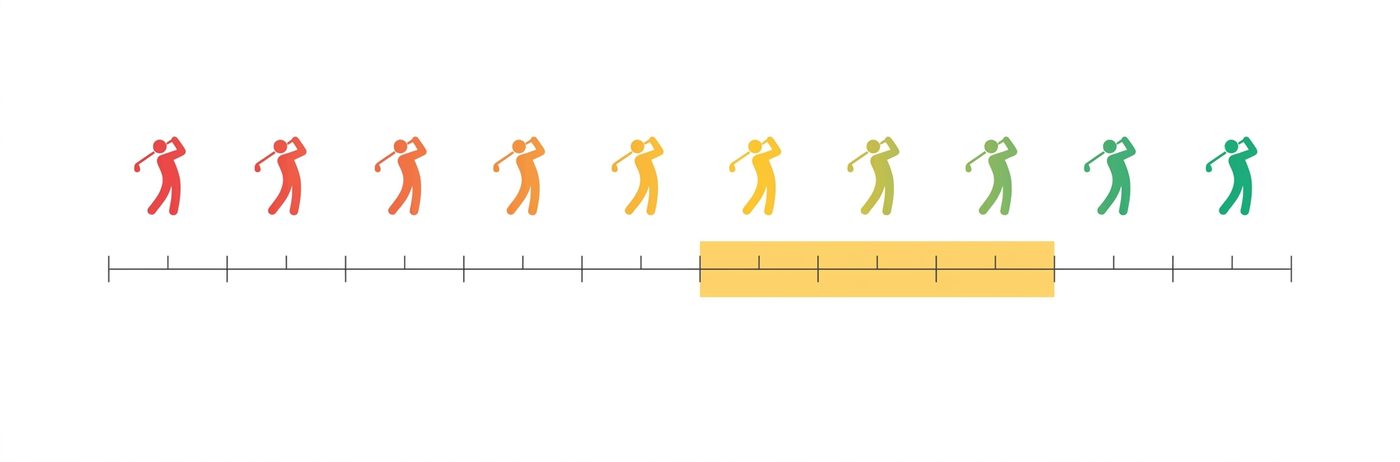
At most three faults that cleared your pattern threshold — the share of swings a fault must appear in before it counts. A beginner's is 60%; an elite golfer's is 20%. For each:
① Steep transition — 5 of 5 swings (8.9° on average).
Optimal: downswing plane the same as or 5–15° flatter than the backswing plane.
Your Rotational Separation Test passed — this is technique, not mobility. Drills will help more than stretching.
▶ Pump drill — shallow the club
⏱ About 500–1,000 quality reps. At your 120 a week, roughly 5–9 weeks. Re-estimated after each clinic.
Then Doing well — always shown, because a sheet that only lists faults is not read twice.
The one thing nobody else does at this price
Technique, or mobility?
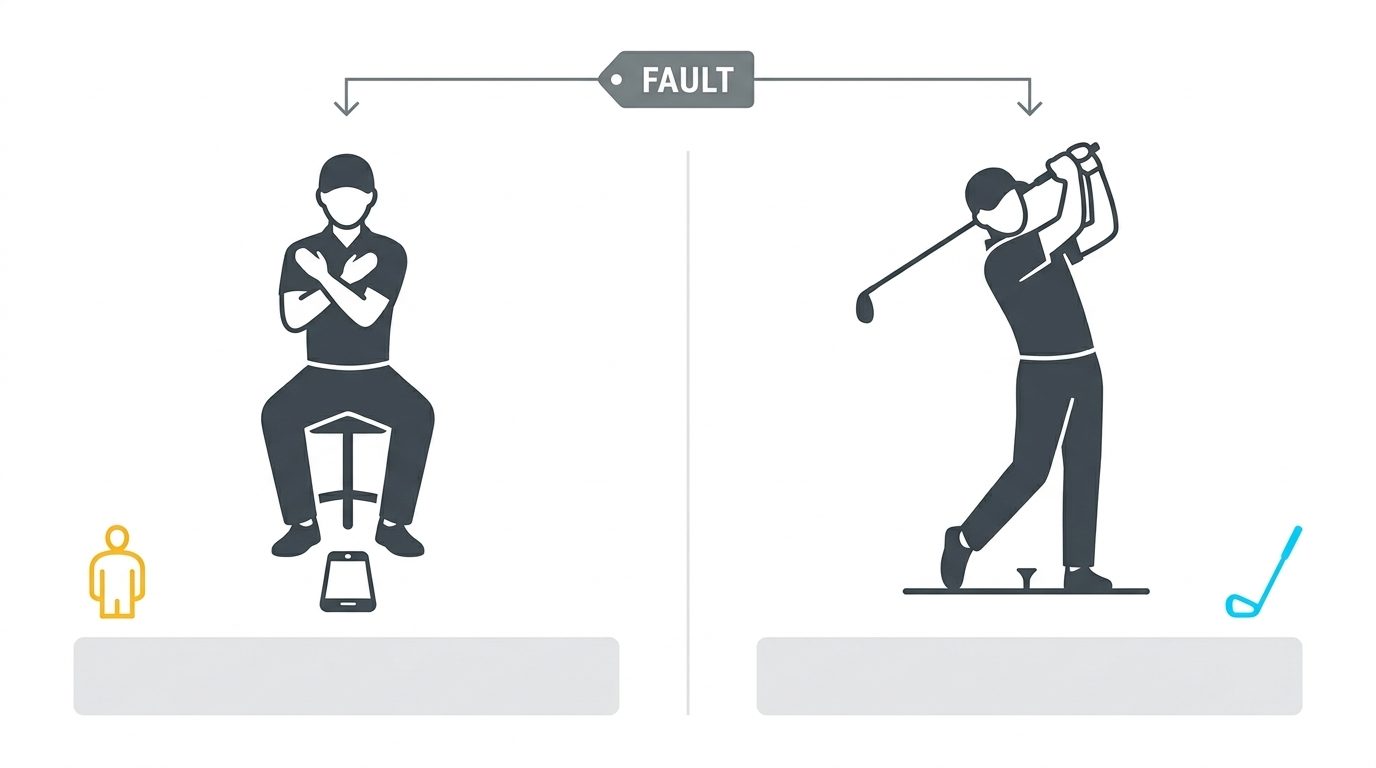
Each fault is cross-referenced with your Body Assessment. If the test that screens for that fault's physical block was failed, the fault is mobility and the report gives the exercise before the drill. If it passed, the fault is technique — stop stretching, go and drill. If you have not done the four-minute screen, the report says it cannot tell yet. It never guesses.
Aligned to you
Ability
Sets how often a fault must appear before it counts, and how soon you are asked back — two weeks for a beginner, monthly otherwise.
Goal
Distance pulls sequence and lag up; consistency pulls face, path and tempo up; playing without pain puts mobility faults first. It re-orders — it never hides a fault.
Be careful with
A back, shoulder, hip, knee or wrist you have told us about removes any exercise that loads it, and switches the rest to the gentler version. Not medical advice.
Time to fix
A range, with the working shown, at your real practice rate from your drill log. Re-fitted from your own progress after the second clinic.
What the clinic does not do. It does not rate the follow-through until there is a detector for it. It does not present an impact estimate as a measurement. It does not call a fault "mobility" or "technique" without a body screen behind it. And it does not promise a date — it gives you a range and the rate it assumed, and updates it from what you actually do.